
Create a Wallet
Understand account creation, network choice, and the first security checks.
Learn more →imtoken · Multi-chain Wallet & Web3 Knowledge Hub
A multi-chain wallet, blockchain network and Web3 knowledge hub from imtoken
Manage assets across supported networks, understand receiving and sending, learn how DApp connections and token approvals work, and build a repeatable security routine for every on-chain action.
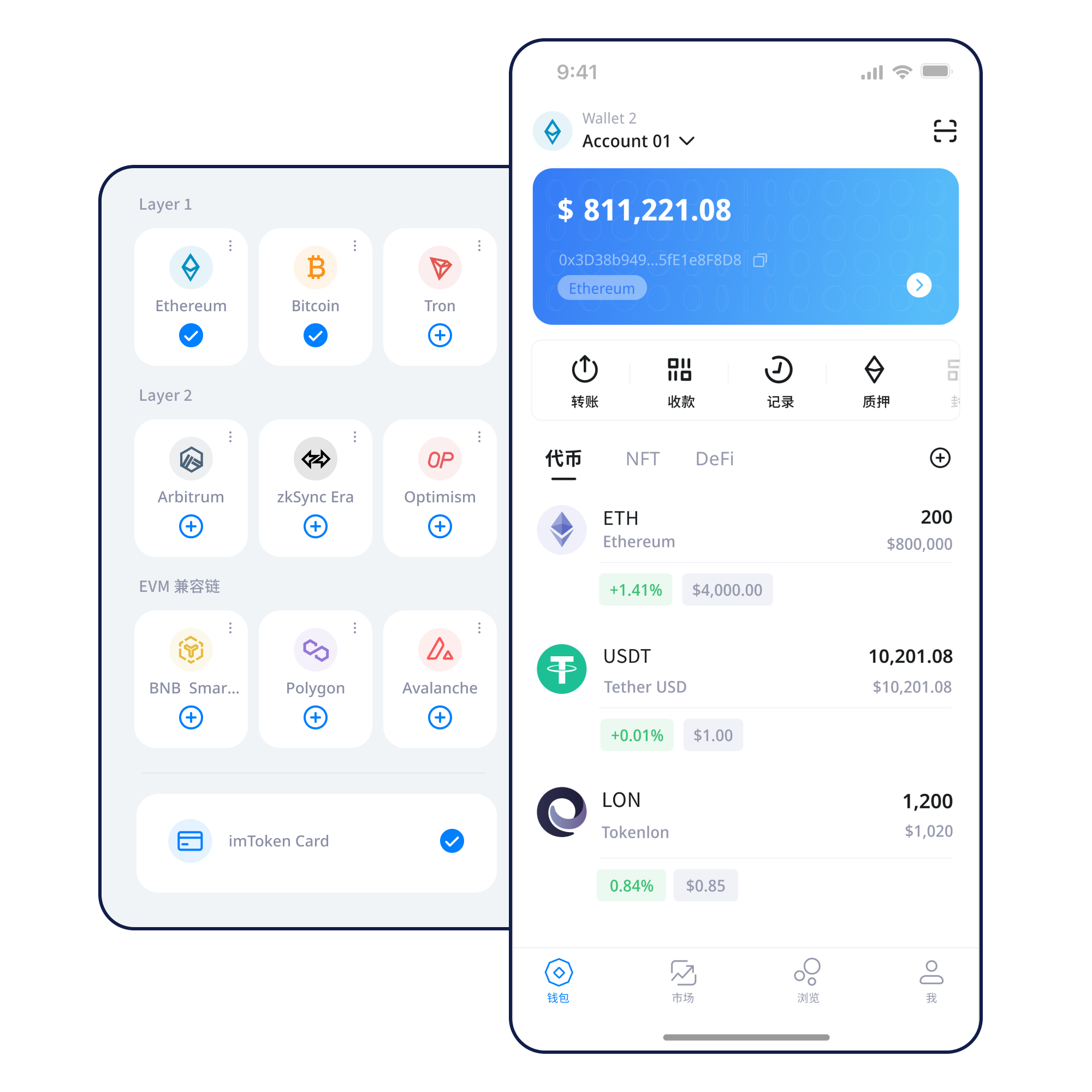
Understand account creation, network choice, and the first security checks.
Learn more →Keep the seed phrase offline and verify the backup before relying on it.
Learn more →Confirm the receiving address and the exact network supported by the sender.
Learn more →Review address, network, amount, gas, and the final transaction hash.
Learn more →Verify the domain, account request, signature, and token approvals separately.
Learn more →Wallet capabilities
Different wallet tasks need different checks. The interface should make the network, request type, and verification path understandable instead of hiding them behind one generic button.
Compare network names, address support, and confirmation rules before moving assets.
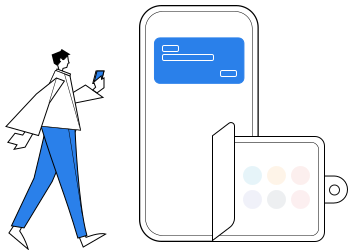
Mobile wallet access for asset visibility, network management, transaction history, and DApp usage.
Review the receiving address, network, amount, gas, and transaction hash.
Use browser connections with explicit account, signature, and approval checks.
Keep seed phrases and private keys offline. Treat every DApp approval as a separate decision.
Blockchain networks
Network choice affects fees, confirmations, bridges, and whether a receiving service can recognize the transfer.
Multi-chain
Compare networks before moving assets. The token name alone does not tell you which chain you are using.
Read the guide →Public Chains
Nodes, blocks, transactions, confirmations, and explorers form the basic verification path.
Read the guide →
EVM
EVM-compatible networks share many concepts while remaining separate networks.
Read the guide →
Layer 2
Layer 2 systems can reduce cost and increase throughput, with specific bridge and settlement rules.
Read the guide →
Usage path
Use the official download entry and review the product context before starting.
Choose creation or import based on your situation; never paste a seed phrase into an unrelated webpage.
Store the seed phrase offline and keep the private key away from screenshots, chats, and cloud notes.
Confirm that both sender and recipient support the same network.
Review address, amount, network, and gas before signing.
Use the transaction hash to verify results and revoke approvals you no longer need.
Web3 & DApp
Connecting a wallet does not mean every later request should be accepted. Verify the domain, account request, signature or approval, and disconnect connections you no longer need.
Web3 guide →Security
Protect seed phrases and private keys, question unexpected signatures, review token approvals, and verify address, network, and amount before sending. Public devices, public networks, remote-control tools, and fake support channels can all increase risk.
Open Security Center →Academy
Start with addresses, seed phrases, private keys, networks, gas, transaction hashes, DApps, and approvals. Each concept becomes useful when you know where it appears in a real transaction and how to verify it.
Start learning →A practical explanation connected to real wallet use.
A practical explanation connected to real wallet use.
A practical explanation connected to real wallet use.
A practical explanation connected to real wallet use.
A practical explanation connected to real wallet use.
A practical explanation connected to real wallet use.
Ethereum · PoS
Learn about Ethereum proof of stake, validators, reward sources, network state, withdrawal mechanisms, and the exit process.
Read basics →Rewards can change. Exits may require waiting. Validators can face network penalties. Smart contracts, third-party services, and asset prices carry risk.
PoS & validator guide →Updates
Practical information is published without inventing dates, partnership claims, or usage figures.
Practical information is published without inventing dates, partnership claims, or usage figures.
Practical information is published without inventing dates, partnership claims, or usage figures.
Practical information is published without inventing dates, partnership claims, or usage figures.
FAQ
A digital wallet manages keys, addresses, and transaction requests associated with blockchain accounts. The assets themselves are recorded on the relevant blockchain network rather than stored inside the app.
A seed phrase can derive a set of wallet keys, while a private key directly controls a specific account. Both are highly sensitive and should never be sent to another person or entered into an untrusted website.
No. imtoken staff will never ask for your seed phrase, private key, or verification code. Requests using support, verification, airdrops, or account unlocking as a reason to collect them should be treated as high risk.
Tokens may exist on multiple blockchains or through bridging and wrapped-asset systems. Always make sure the sending network matches a network supported by the recipient.
Gas measures the computation and storage consumed by an on-chain action. Network fees are typically related to gas usage and the fee rate required by the network.
A transaction hash is a key identifier for locating an on-chain transaction. It can be used with the relevant block explorer to verify status, block inclusion, and confirmations.
No. A connection usually establishes account interaction. Signatures, transactions, and token approvals are separate requests and should be reviewed independently.
imtoken